Living in North Norfolk: Life between the salt marshes and the market towns
Living in North Norfolk, in the sense most buyers mean it, is life on the shore between the Burnhams and Cromer, or in the market towns and villages a few miles inland.
Many arrive knowing the area from summer holidays. Moving to North Norfolk asks different questions of the place: how the harbour villages feel in February, which town will become the centre of everyday life, and which communities stay full once the season ends. The answers change from one stretch of shoreline to the next, which is why the choice of location matters so much here.
The setting: salt marsh, shingle and flint
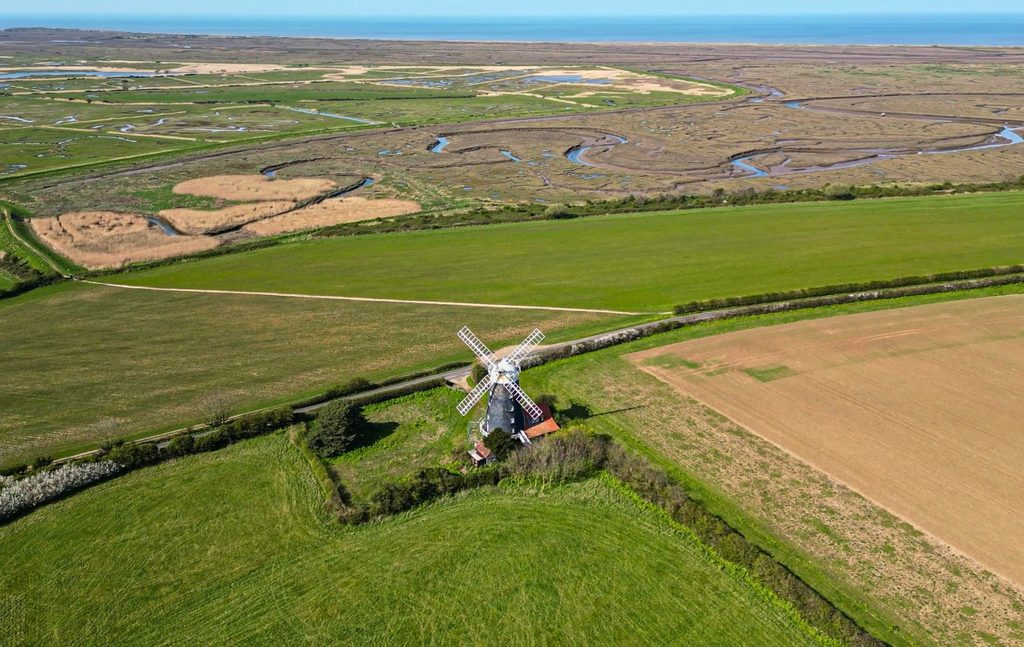
Much of this coast lies within the Norfolk Coast National Landscape, first designated as an Area of Outstanding Natural Beauty in 1968. That protection goes some way to explaining why it looks much as it did a generation ago.
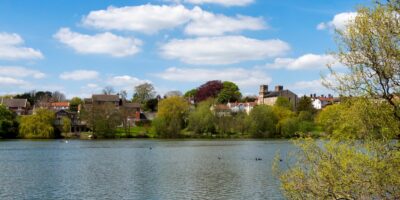
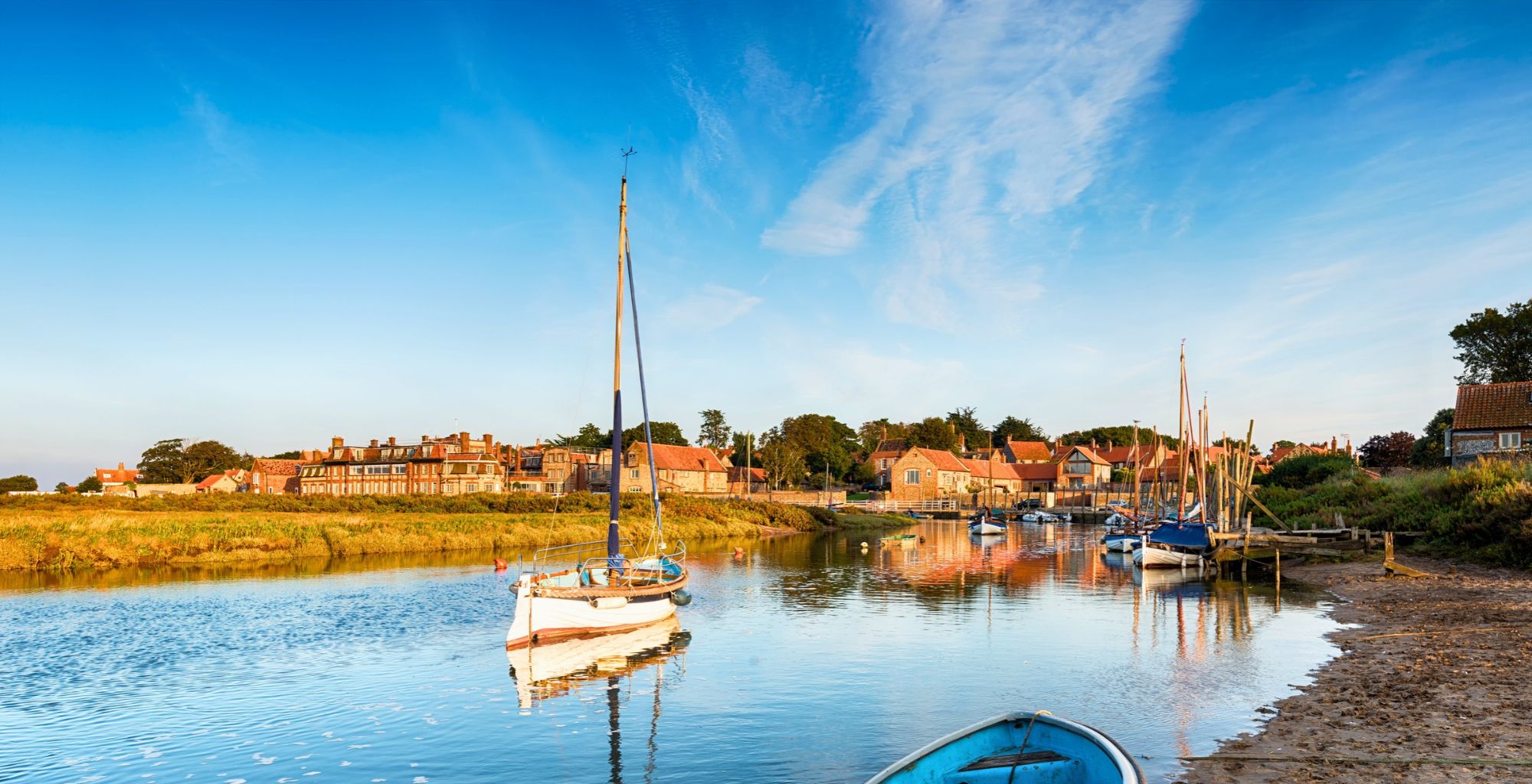
West of Weybourne, land and sea are in slow negotiation: salt marsh threaded with tidal creeks, shingle spits, and harbours that drain to mud at low water. Blakeney Point, cared for by the National Trust, is home to grey and common seals, and Cley Marshes became the Norfolk Wildlife Trust’s first reserve when it was bought in 1926. Further east, low cliffs rise towards Sheringham and Cromer.
The buildings belong to the ground they stand on.
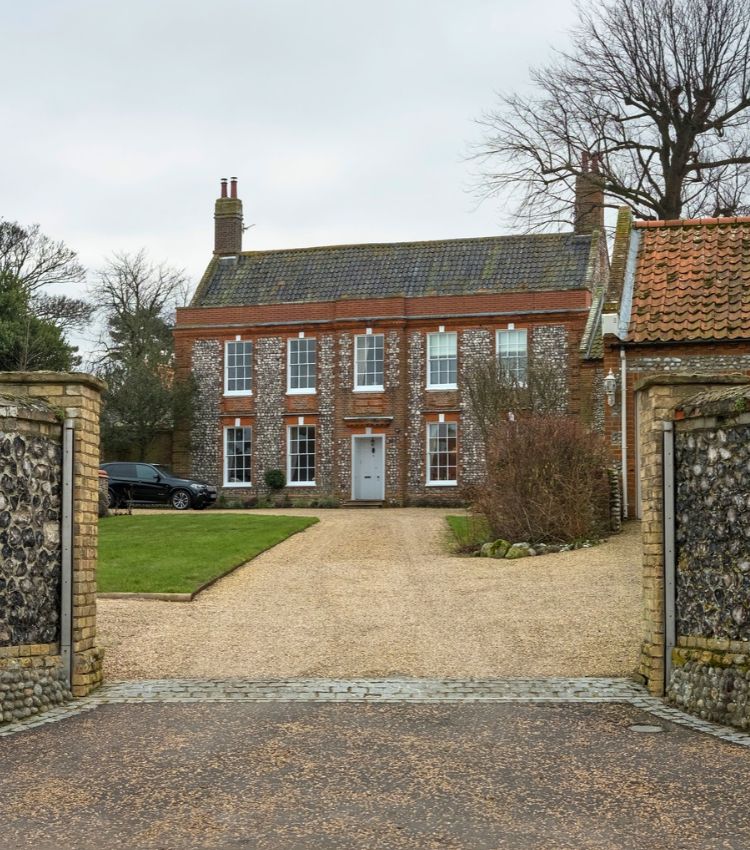
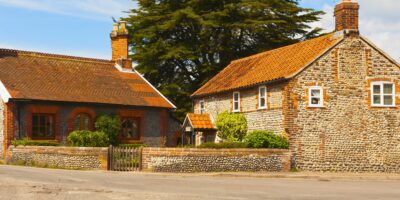
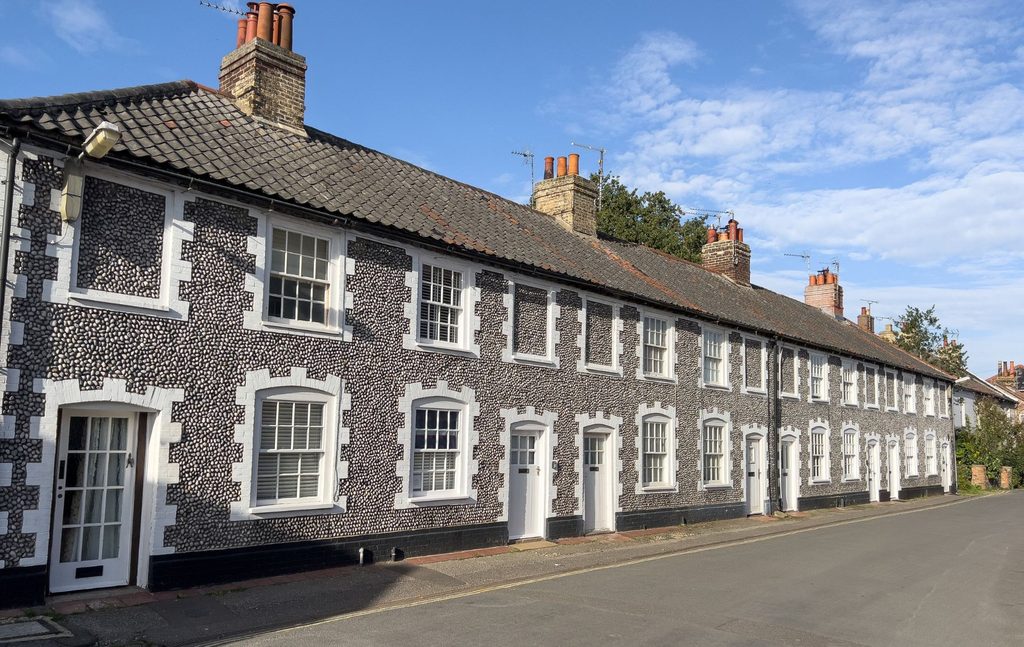
Flint gathered from fields and beaches is the defining material, laid in courses or knapped and framed with brick beneath pantiled roofs. The Norfolk Coast Path runs the length of this coast, along sea walls, dunes and the edges of the marshes, under skies that seem to fill half the view.
Places to live in North Norfolk: the coast and its towns
Some of the places to live in North Norfolk are best understood west to east along the A149 coast road, then inland. The differences between them matter more than a holiday visit suggests.
The Burnhams to the Glaven villages
The Burnhams and Brancaster, just over the district boundary, centre on Burnham Market. The village was formed from three older settlements and is set around a long green lined with Georgian frontages and independent shops.
Sailing draws people to Brancaster Staithe and Burnham Overy Staithe, and Burnham Thorpe, Nelson’s birthplace, lies a short distance inland. Second homes have a strong presence across this corner of the county.
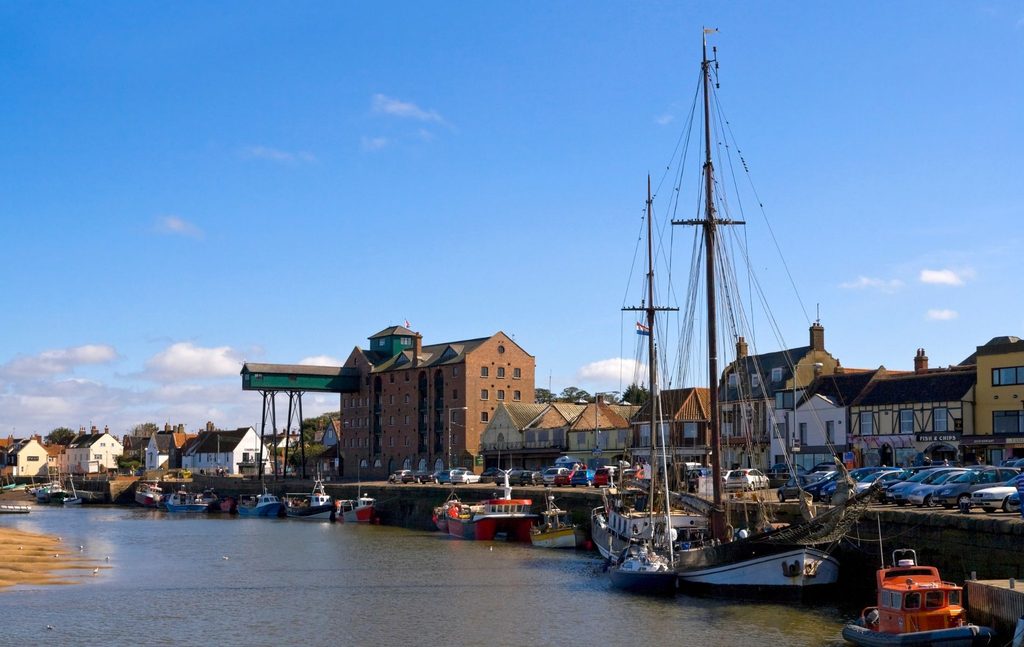
Beyond the Holkham estate and its beach, Wells-next-the-Sea is a working quay town with a year-round population and its own secondary school. The Glaven villages of Blakeney, Morston, Cley-next-the-Sea and Wiveton, with their flint cottages and tidal creeks, are what many people picture when they think of this coast, and they are also among its most seasonal.
Holt, Sheringham and Cromer
Holt, a few miles inland from Blakeney, is the everyday centre for much of the area. A fire in 1708 destroyed most of the medieval town, and the rebuilding that followed left the largely Georgian Market Place and High Street seen today.
The town is home to Gresham’s, the independent day and boarding school, and the heritage Poppy Line runs from the edge of town through Weybourne to Sheringham.
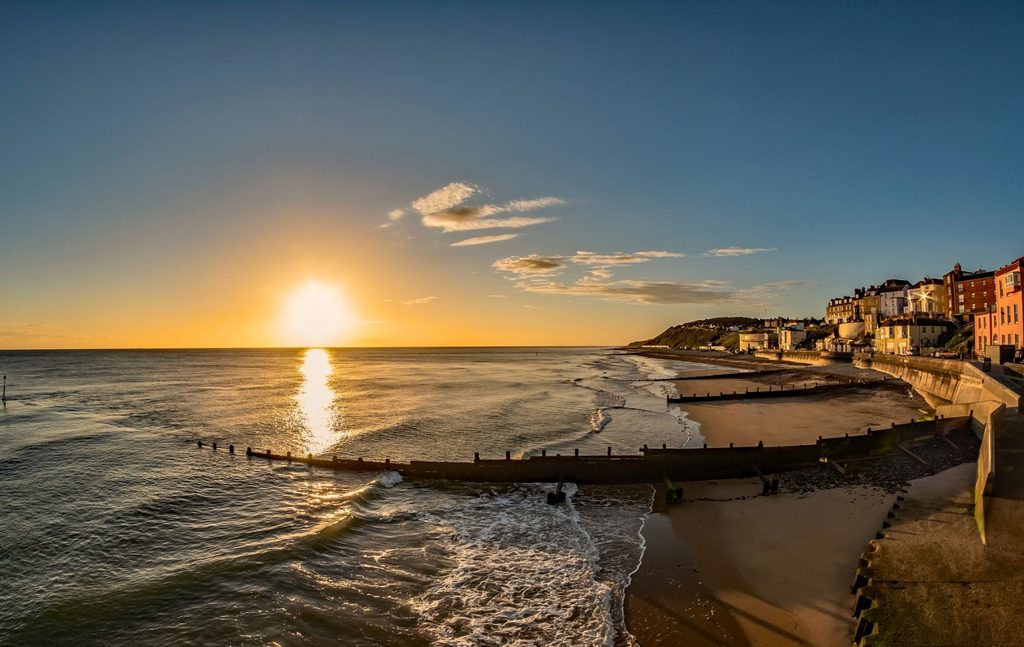
Sheringham and pier-fronted Cromer, Victorian and Edwardian resorts on the Bittern Line, are full-time towns where supermarkets, surgeries and schools sit alongside the seafront. Beyond Cromer, Overstrand and the clifftop villages are quieter.
Parts of this shoreline are subject to erosion, so specialist survey advice and the council’s coastal management information belong in the due diligence on any clifftop purchase.
Villages and market towns inland
Letheringsett and Glandford in the Glaven valley offer village life close to Holt. Fakenham and North Walsham are working market towns with a wider spread of services and more full-time residents.
Coast and countryside answer different priorities, and many buyers look seriously at both.
The property market: character and mix
North Norfolk’s housing is defined by period character and the range within it. Flint and brick cottages fill the harbour villages, Holt has its Georgian town houses, and Sheringham and Cromer offer substantial Victorian and Edwardian villas, many built in the decades after the railway arrived.
Inland, there are farmhouses, former rectories and barn conversions, often with more land. In our experience, the best-placed houses near the sea can attract strong interest, not least because the shoreline itself limits how many there can be.
Some desirable homes also change hands privately, without reaching the open market. A North Norfolk buying agent with local knowledge and long-standing relationships across the area can be well placed to hear of them.
Full-time or second home: living in North Norfolk year-round
The choice between a main home and a second home carries particular weight here. In the most popular harbour villages, a high proportion of houses are holiday homes or lets, which brings a lively summer and a much quieter winter, when more windows stay dark and some shops shorten their hours.
Those who live in these villages full-time tend to find a smaller but close community through the off-season, while the larger towns keep a steadier pace.
For anyone weighing the two, the question is less about the house than about how they intend to live in it.
Cost plays a part too. North Norfolk District Council and King’s Lynn and West Norfolk both charge a premium that means furnished second homes pay double council tax, subject to certain exceptions, and this can prompt long-standing owners to consider making the move permanent.
Schools: independent and state
Families considering living in North Norfolk will find a choice of independent and state schools. Some of the area’s schools include Gresham’s in Holt, founded in 1555 and taking pupils from nursery age to the sixth form, and Beeston Hall, a prep school at West Runton between Sheringham and Cromer.
State secondaries include Alderman Peel High School in Wells-next-the-Sea, Sheringham High School, Cromer Academy, North Walsham High School and Fakenham Academy. Alderman Peel takes pupils from 11 to 16, so Wells students move elsewhere for the sixth form.
In rural villages, the distance to secondary school and the availability of school transport deserve as much attention as the school itself. Catchment boundaries are reviewed periodically by Norfolk County Council and can change, so buyers should confirm current boundaries directly with the school or the council before committing to a purchase.
Getting around: rail, road and the reality of distance
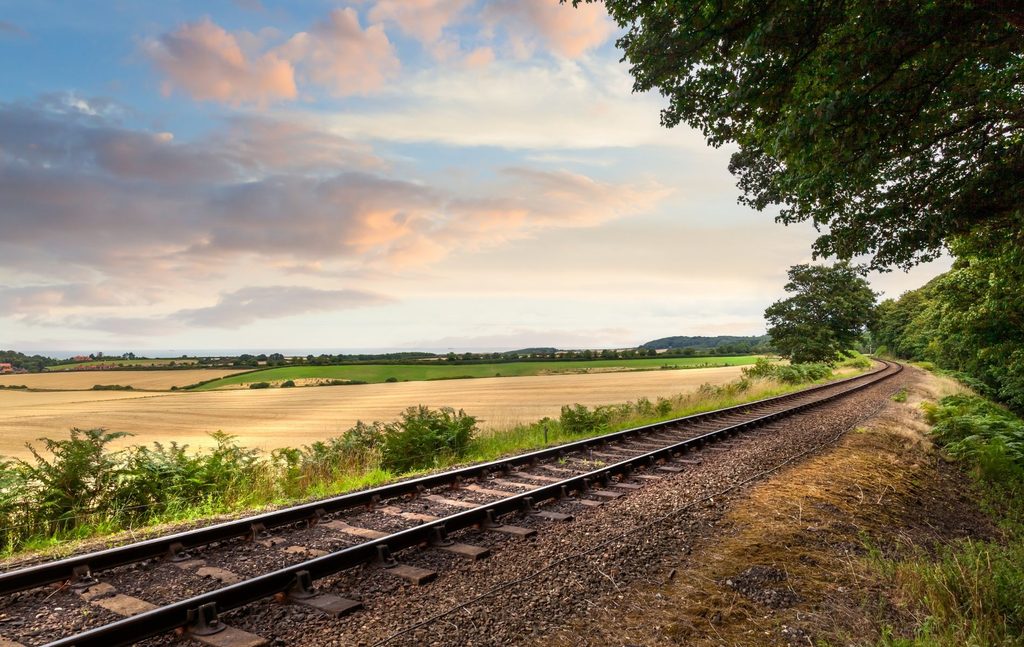
Travel in North Norfolk is by A-road and country lane, and for many people the slower pace of getting about is part of what living in North Norfolk offers. The A148 runs through Fakenham and Holt to Cromer, the A149 follows the coast, and the A140 heads south to Norwich, the area’s city for shopping, onward rail and hospital care.
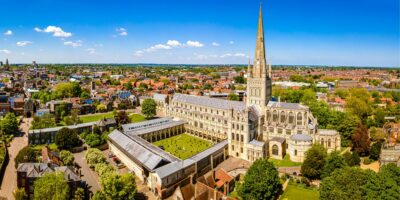
The Bittern Line runs from Sheringham and Cromer to Norwich, usually hourly, in around an hour, with North Walsham roughly half an hour from the city. Direct trains from Norwich reach London Liverpool Street in a little under two hours, a rhythm better suited to hybrid working than a daily commute.
Buyers who need the capital more often tend to look to Norfolk’s south, where Diss sits on the main line. For healthcare, the Norfolk and Norwich University Hospital is the main acute hospital, and Cromer Hospital provides a nurse-led minor injuries unit and outpatient clinics.
Help to find a property in North Norfolk
Living in North Norfolk rewards those who choose their stretch of coast, or their market town, with care and with a clear sense of how it will feel in every season.
As a North Norfolk property finder, Sam Williams combines local knowledge with a network of industry contacts built across East Anglia, from the coast south to Beccles and Woodbridge. Those relationships can bring homes to her attention at an early stage, including some that are sold without public marketing.
If you are considering a move to the area, Sam would be glad to hear from you. Please get in touch.
Frequently asked questions about living in North Norfolk
Is North Norfolk a good place to live?
For people who value the coast, space and a slower pace, North Norfolk suits year-round life well, particularly in towns such as Holt, Sheringham and Cromer with full-time communities. The main considerations are the distance to Norwich for hospital care and larger shops, and quieter winters in the most seasonal harbour villages.
Where does North Norfolk start and end?
In everyday use, North Norfolk means the coast from the Burnhams to Cromer and its inland towns. The North Norfolk District Council area is narrower: the Burnhams and Brancaster fall within King’s Lynn and West Norfolk.
How long does it take to get from North Norfolk to London?
By rail, the Bittern Line runs from Sheringham and Cromer to Norwich in around an hour, and direct trains from Norwich to London Liverpool Street take a little under two hours. By road, the A140 links the area with Norwich, from where the A11 and M11 continue towards London.
Do second homes in North Norfolk pay extra council tax?
Yes. Since April 2025, North Norfolk District Council and King’s Lynn and West Norfolk have charged a premium that means furnished second homes pay double council tax, subject to certain exceptions.
What are the main towns in North Norfolk?
The main towns include Holt, Sheringham, Cromer, Wells-next-the-Sea, Fakenham and North Walsham, each with a distinct character and range of everyday services.